Monday, 4 March 2024

More Egyptian goslings

A Green Woodpecker preened and called on an oak near the Queen's Temple.


The Long-Tailed Tits at the southwest corner of the bridge were still busy with nest building.


Also present were the usual male Chaffinch ...
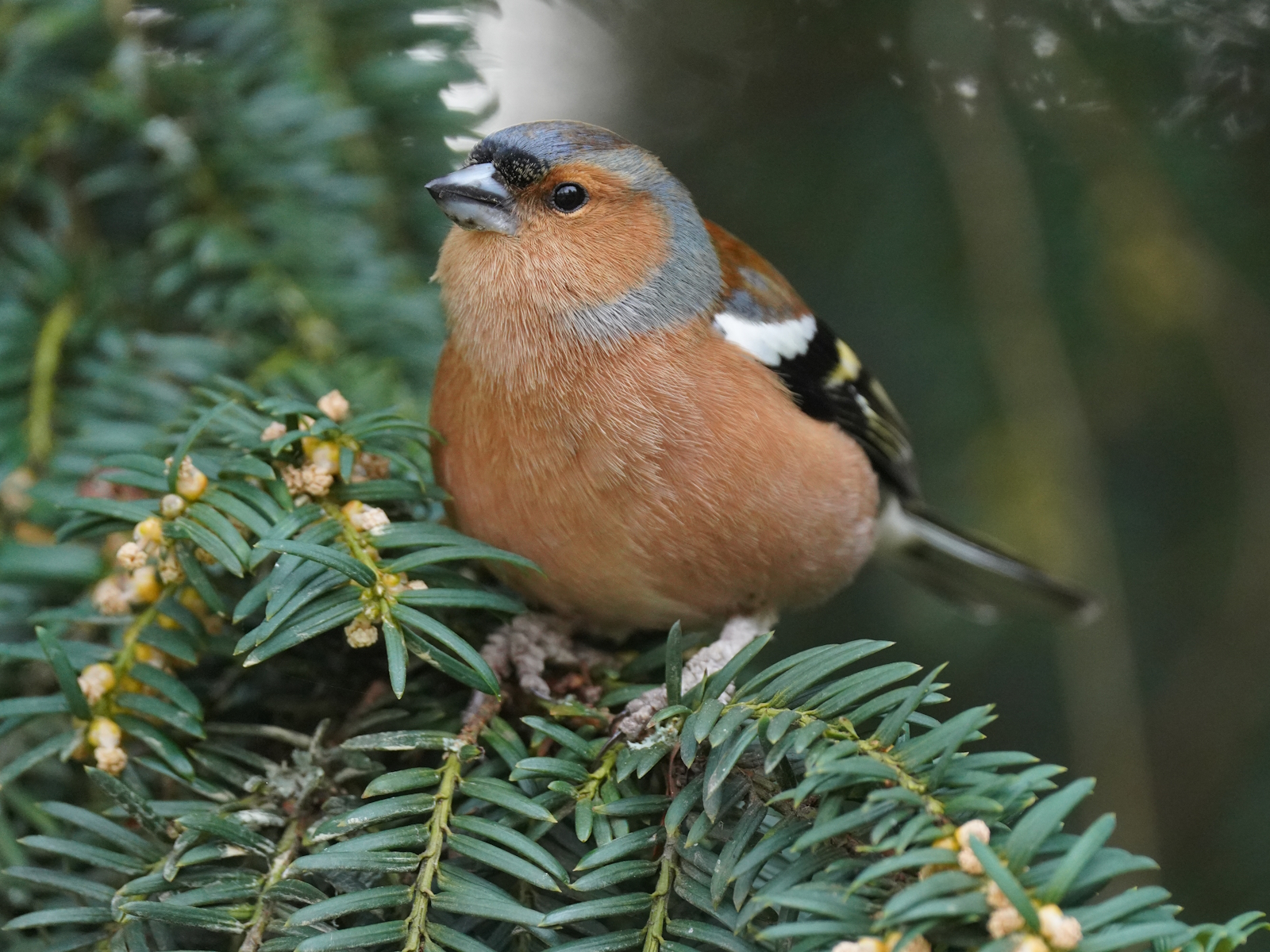

... and one of the Coal Tit pair, both expecting pine nuts.


Another Coal Tit was preening in cherry plum blossom in the Rose Garden.


Tom got a picture of a Greenfinch in Kensington Gardens yesterday. There are quite a few around the Long Water.


A Jackdaw near Peter Pan waited impatiently for a peanut.


Virginia took this remarkable picture of one of last year's Grey Herons knocking an adult off a branch at the east end of the island. Young herons have little respect for their elders.


All was peaceful in the nest at the other end, with one of the residents dozing. The other may have been sitting: in this deep nest they disappear when they sit down.


A view of the middle nest from the far side of the lake, with two young in the main nest and an adult on the upper level.


A Great Crested Grebe couple rested comfortably together near the lake outflow.


A pair of Egyptian Geese on the Serpentine have seven brand new goslings. They were feeding on the variety of weeds at the edge of the Triangle shrubbery.


Later they went along the shore to the area fenced off after the damage to the bridge. They are safe from dogs here, but not from a hungry Lesser Black-Backed Gull which stared at the mother sheltering her goslings under her wings. This gull has bright yellow feet but is not Pigeon Eater, who has no black on his bill.


The Egyptians who live in the Italian Garden have six almost equally tiny goslings, which they brought out on to the Long Water.


A pair of Mute Swans were inspecting the place where the killer swan nested last year, which is now vacant as the killer pair will nest on the Long Water island.


The Black Swan and his girlfriend had been given some food and were now having trouble with Black-Headed Gulls.


The Mandarin drake on the Serpentine was also being fed, watched by envious Feral Pigeons.


A queen Buff-Tailed Bumblebee browsed on a wallflower in the Rose Garden.

Sunday, 3 March 2024

Stonechat on Buck Hill

A male Stonechat in his smart breeding plumage was flying around Buck Hill catching insects in midair. He perched in a small tree ...


... and on a dry ragwort stem.


The Siskins were back in the alders lower down the hill.


There were nesting Long-Tailed Tits all over the place. The nest behind the railings at the southwest corner of the bridge can be glimpsed through the brambles, showing it to be fairly complete already.


One bird was pulling bits of fibre out of a dead plant ...


... and the other arrived carrying a bit of moss.


Later they will start collecting feathers to line the nest.

The main element of the complex structure is spider webs, which give it elasticity so that it can stretch as the chicks grow. A different pair near Peter Pan were collecting bits of web.


The pair of Coal Tits near the bridge were interested in the feeding that was going on, and came to take pine nuts from the railings.


A Wren sang near the Italian Garden.


A Robin near the leaf yard gave the camera a serious stare.


A Starling shone in the sunshine. Attentive readers of this blog will be able to tell its sex.


The male Little Owl at the Serpentine Gallery came out of the top of the chestnut tree in the afternoon.


Pigeon Eater was enjoying a late lunch at the Dell restaurant.


The two young Grey Herons are learning to fly. Here they were on the right of the first shot, with the parents keeping their distance to avoid bothered too much by them clattering their bills to demand feeding.  Then the young bird in the upper nest spread its wings and took a short hop down to the lower level.


The Black Swan and his white girlfriend are showing signs of wanting to nest, and have been examining sites on the Long Water at the southwest corner of the bridge, near the landing stage, and east of the Lido where the killer swan nested last year, which is where I filmed them today. The killer won't be needing this site as he has a better one now on the island in the Long Water. She is now actually trying to respond to his calls but, being a Mute Swan, can't manage more than a snort.


A Seven-Spot Ladybird perched on a blade of grass near the Italian Garden. There's an odd number of spots because one is shared between the wing cases just behind its head. It's good to see a native species instead of the invasive Harlequins.


Finally, a picture from outside: Jin Yucheng photographed a Black-Necked Grebe in full breeding finery at Staines Reservoir.

Saturday, 2 March 2024

Siskins return

A flock of Siskins were feeding in the tops of the alder trees near the Italian Garden.


A Great Tit perched on a camellia flower in the Flower Walk.


The corkscrew hazel bush just along the path is a favourite place for small birds.


A Wren pottered around in the undergrowth on the edge of the leaf yard.


A Chaffinch foraged behind the Rose Garden railings.


Farther into the bushes, two Robins were feeding on the ground. They were not attacking each other, so evidently they are a pair.


A Pied Wagtail sat on the kerb at the edge of the Serpentine. I was worried about the state of its feet, but it stood up before flying away so they must have been reasonably OK. Wagtails often get damaged feet, with Grey Wagtails, which are larger, worse affected.


A few days ago I published a video of Carrion Crows tearing up the freshly laid turf on the Parade Ground. I've been told that the place is now visited by the falconer with a Harris Hawk to scare the crows away. I checked the Parade Ground, and there were crows on it, of course.


They wait till the man and his hawk have gone away, and come back. It's the same story with the pigeons on 'Number One Hyde Park' (the hideous polygonal flats between the park and Knightsbridge) where the same man comes once a week to scare off the pigeons. The latter seems peculiarly unnecessary anyway, since there's a pair of Peregrines just 150 yards up the road helping themselves liberally to pigeons -- and that doesn't keep the pigeons away either.

The crows have stopped tearing up the turf at the bottom of the Parade Ground, which is hand-laid in small rectangles, because it's now rooted itself in the ground and can no longer be pulled up. The turf higher up is from giant rolls laid by tractor and there are few corners to pull up.

The pigeon-scaring tactic has worked in Trafalgar Square to some extent, possibly because the falconer comes oftener, but more likely because people are no longer feeding them. Anyway, I'm glad he's making money.

The female Peregrine was by herself on the tower, restlessly shifting around. In this picture you can see the metal BTO ring on her right leg. I still haven't been able to get a proper look at the red plastic ring on her left leg, which I've been asked to read.


The pair of Grey Herons in the second nest at the west end of the Serpentine island were doing a bit of twig rearrangement.


The young herons are now almost always on the upper nest. Evidently their parents have adjusted to feeding them there, though there's not much room for three herons on this small nest which was probably built by a Carrion Crow or a Magpie.


A mainly sunny day was interrupted by sharp showers, one of hail. There was a rainbow over the Serpentine, with gulls wheeling in it.


The killer Mute Swan and his mate were by the nesting island on the Long Water.


Later the male swan went on to the Serpentine and amused himself by bullying the others.


Shovellers are winter visitors to the park and most of them have now left, but there were still two pairs on the gravel strip on the Long Water.


Spring flowers coming up near the bridge include a Red Deadnettle.

Friday, 1 March 2024

Long-Tailed Tits nesting

Long-Tailed Tits are now building nests all over the park. This one carrying a bit of spider web is nesting deep in the brambles at the southwest corner of the bridge. The nest is quite invisible, and they only way you know it's there is by seeing where they fly into the brambles before going don to the nest.


Another on the east side of the Long Water picked something off a twig which may be a brown insect larva, though it's the same colour as the leaf buds and might be one.


Long-Tailed Tits eat seeds especially in winter when insects are in short supply: here's a video I made in the autumn of 2022.


A Coal Tit ...


... and a Robin at the southwest corner of the bridge are both turning up when I'm feeding Great Tits there and are clearly interested. I think they'll come to my hand in due course. The Robin nearly did today but panicked at the last moment.


Magpies bathe by going into the water and splashing briefly and then coming out and shaking themselves dry, which they repeat several times till they're satisfied with the result.


The remains of a Feral Pigeon at the Dell restaurant showed that Pigeon Eater has had his lunch. He was having a lie down after his heavy meal.


The two young Grey Herons on the island had climbed up to the nest above theirs and were shifting around restlessly in the wind. 


Their parents had moved some distance away into the tree on the left to avoid being pestered by them.


The heron in the nest at the east end of the island could just be seen sitting.


The one at the other end couldn't, because the nest is deeper and the bird disappears when it sits down.

The Moorhen at the top of the Dell is now regularly at the edge of the waterfall pool.


There was another Mandarin drake on the Long Water, here seen from the far side of the Vista.


The reason we have Mandarins at the moment is a sad one. Their usual territory is on the Regent's Canal, but some vile scumbag from a cheap restaurant has poured a drum of used cooking oil into the water. Some oiled birds have died, others have been rescued and are being cleaned, and the rest have left. Attempts are being made to clean up the spill, which has drifted as far as Paddington Basin, but there's only so much you can do and the rest will have to be left to degrade naturally. It will be a long time before wildlife on the canal returns to normal.

Jon Ferguson found this remarkable duck in Finsbury Park. It's a Mallard x Pochard hybrid, quite a rare cross.


The male Egyptian Goose in the Italian Garden is still waiting for his mate to emerge from her tree with goslings. I first saw him alone on 12 February, so it will be ten days or so before she comes out.


The pair at the Henry Moore sculpture whose nest failed were back in their usual place on the lawn. There's another pair living nearby on Buck Hill, shown here, with which they often have territorial disputes.


Early blue flowers of Two-Leaf Squills are coming out beside the Long Water.


These low mounds east of the Albert Memorial, now covered with crocuses and daffodils, are the remains of Charles Bridgeman's 18th century 'Prospect Mount', of which I published a drawing on Monday. It was quite a large artificial hill 70 ft high and 100 ft wide, so there was a lot of debris and the mounds stretch for 100 yards.