Monday, 13 July 2020

The Great Crested Grebes nesting on the edge of the reed bed have their first egg, still shining white but it will soon get stained by the soggy algae in the nest. It is not being incubated yet, as there will be more eggs soon and they will all be started at once.


The grebes from the east end of the island were out on the lake with their new chicks. There are are at least two.


One of the chicks at the bridge wanted to climb on to its parent's back, but it's much too large for that now.


After yesterday's traumatic events, the Coots at Peter Pan were carrying on as usual ...


... and the gull that ate their chick was two posts away waiting for another.


An irresponsible dog owner let her dog attack the Mute Swans near the bridge. The swans faced down the dog ...


... and it crept away. But swans are not always so lucky.


The four cygnets on the Serpentine are now very adventurous, and two of them were going round the lake on their own a long way from their parents.


A Mandarin drake at the Vista was in full eclipse, distinguishable from a female only by having a red bill and a slight trace of a mane on the back of its neck. It was also moulting and had no flight feathers, so it needed to be an inconspicuous grey.


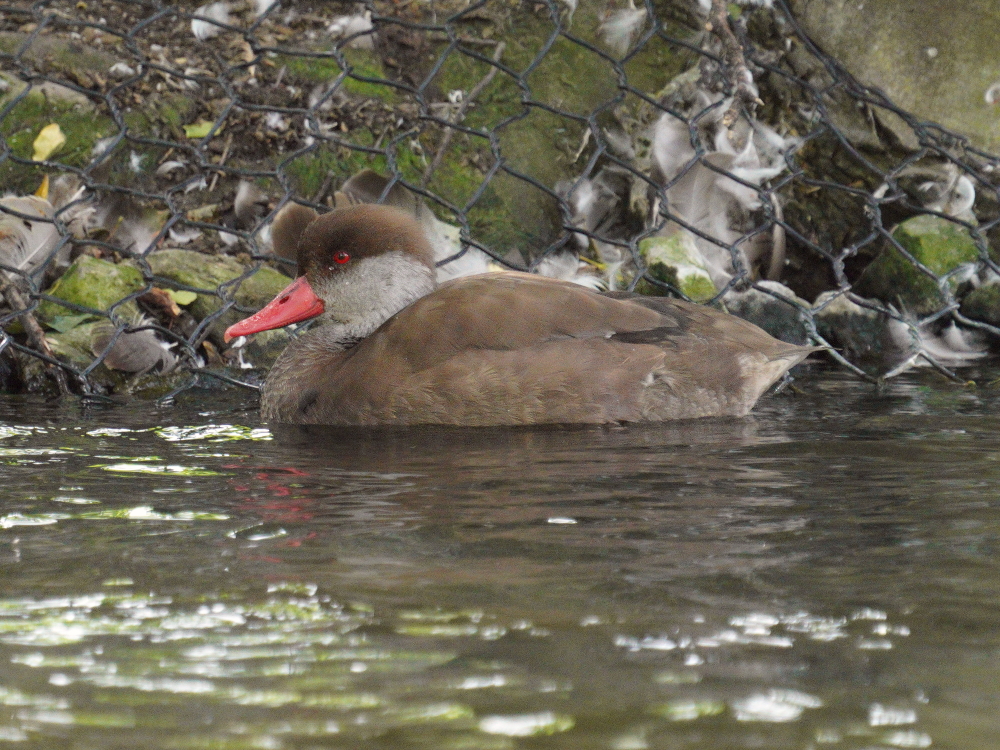
A Red-Crested Pochard drake at the island was in the same state.

A Carrion Crow bathed in the Serpentine in the usual manner of crows, rinsing and drying alternately, which seems to be the most efficient way of removing parasites.


Two Wood Pigeons cooled off at the top of the waterfall in the Dell.


A female Blackbird near the bridge stared suspiciously at the camera.


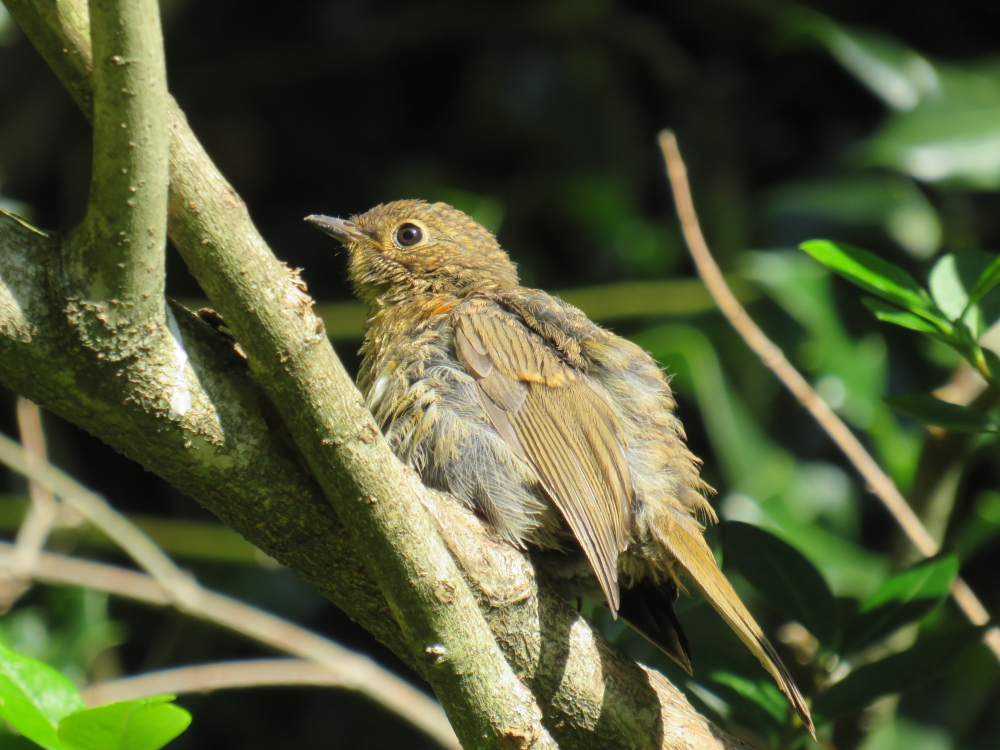
A young Robin hopped around on the lawn in the Rose Garden.


A Dunnock sang from deep inside a bush, where he could just be seen.


A male Emperor dragonfly hunted under the parapet of the Italian Garden.


A Red Admiral butterfly perched on a leaf near the Queen's Temple.


A group practised Kendo, the Japanese martial art of sword fighting, using wooden practice swords. The idea seems to be to repeat a stroke over and over again to the point of screaming pain, and so build up strength and endurance.

Sunday, 12 July 2020

There is a family of Blackcaps in the brambles on the west side of the Long Water. Here is one of the young birds, of which there seem to be three.


And here is the father, who has been eating blackberries and is stained with purple juice.


There is also a family of Reed Warblers in the Dell, where there are only a few reeds but plenty of other plants for them to feed in. They were dashing around in the bushes, very hard to see and this bad picture is the best I was able to get.


A dramatic shot by Zhou Zichen of a House Martin diving out of its nest in the ornate cornice of the Kuwaiti Embassy. The nest is on top of one of the petals of the big plaster rose.


Coots have a regrettable tendency to nest in silly places. Here are pair sit complacently on the kerb at the edge of the Serpentine.


But the saddest nest is the one on the post at Peter Pan, where the pair produce several broods of chicks every year which are instantly eaten by gulls. I was just photographing a new chick ...


... when the view was obscured by a Lesser Black-Backed Gull diving in. The next two pictures are by Tom's friend Jayanta Bordoloi, whose reflexes were faster than mine and he got two dramatic and gruesome shots.


The gull devoured the chick on the water.


The Coot nest in the Italian Garden fountain now has chicks in it, the pair's third brood this year. I think they lost all the chicks from the second, though there is still a teenager from the first brood. One of the adults tore off a dead reed, with some difficulty, to add to the nest.


A pair of Great Crested Grebes were building a nest on the edge of the reed bed below the Diana memorial fountain. It's not a good site, too exposed to boats.


The grebes from the nest at the bridge fed their chicks. The fish are brought from the other side of the bridge.


The Great Crested Grebes nesting at the east end of the island have finished with their nest and left with their chick -- just one, I think. A Moorhen took its chicks to the nest and picked insects out of it to feed them.


A lump of Lesser Burdock beside the Long Water was alive with bees. Here are a Honeybee and a Common Carder.


A Meadow Brown butterfly extended its long proboscis into a thistle flower and drank the nectar.


A Comma perched on a bramble showed the little white mark on its underwing that gives it its name.


These are common Black Ants, Lasius niger, on the stonework of the Italian Garden. Once a year flying queens and males emerge and mate. The small ants are workers. After this the queens will chew their wings off and set to work laying eggs in the nest. The males, no longer needed, will die after a few days.


At another nest, a Carrion Crow was bathing in ants to get rid of its parasites. It ungratefully ate one.

Saturday, 11 July 2020

After a long absence there is at least one Kingfisher back on the Long Water. Tom got a distant view of it yesterday. Today it came nearer and perched on the dead willow near the Italian Garden.


This young Blackbird was being fed by its parents yesterday, but today it was finding small insects in the leaf litter.


A Goldcrest sang in the yew tree near the bridge.


There is a family of Greenfinches on the west side of the Long Water near the Queen's Temple, and they can often be seen flying over the path. Mark Williams got a fine picture of the adult male.


He also found a young Robin.


A Blue Tit got impatient at being photographed and wanted to be fed.


A juvenile Black-Headed Gull perched on a post at the Vista.


A pleasing picture by Tom of the young Kestrels in Richmond Park doing their impression of Mount Rushmore.


A Cormorant, a Grey Heron and two Red-Eared Slider terrapins on the fallen horse chestnut in the Long Water.


The Moorhen under the willow near the bridge stood protectively over a chick -- or possibly chicks, it's hard to tell.


On the other side of the willow the Great Crested Grebe chicks waited with their father while their mother was off fishing for them.


No sightings of more than one chick in the nest at the east end of the island, and it seems to be the only one. But we won't know until it's old enough to come out on the open water.


The seven young Egyptian Geese on the traffic island at Marble Arch preened and stretched their wings restlessly. They want to be off, but they have to wait for their mother -- at the right -- to be airworthy again so she can lead them over the road and down to the lake.


The hollyhocks in the Rose Garden are very popular with Buff-Tailed Bumblebees. Big flowers attract big bees, which get covered in big grains of pollen.


A Small White butterfly perched on a leaf.


This dragonfly is probably a Four-Spotted Chaser, though it's hard to tell from this angle. It was nodding its head, and I couldn't see why. It didn't seem to be either eating or cleaning its eyes with its front feet.

Friday, 10 July 2020

The Little Owl was back in her usual alder tree after several days' absence caused by wind and rain.


Later the wind rose again and she went back into her hole.

Swifts whizzed over the Round Pond ...


... and Pied Wagtails ran around the edge.


A Magpie clung to the bark of an oak in the leaf yard.


A Wren perched on a branch beside the Long Water.


A Goldcrest was singing in the evergreens near the bridge, and Ahmet Amerikali got a picture of it.


Young Rose-Ringed Parakeets beg for food by rapidly bobbing their head. This one eventually got a share of a peanut.


The Great Crested Grebe chicks at the bridge are now really too large to ride on their parent's back, but one was allowed on anyway.


A Moorhen looked after two chicks under the same willow tree.


The four Mute Swan cygnets are now experts at touting for food, and were at the Diana fountain landing stage without their parents.


Duncan Campbell reports that the seven young Egyptian Geese at Marble Arch are now making short flights. Their mother (third from right) has now almost completely regrown her wing feathers and should be able to lead them out soon.


A Red Admiral butterfly hung on in the gusty wind. The iron railings don't provide a good foothold.


A Honeybee pushed a small Oedemera nobilis beetle out of the way.


Thistles attracted Buff-Tailed Bumblebees ...


... and a hoverfly -- I think the species is Episyrphus balteatus. This fine photograph is by Ahmet.

Thursday, 9 July 2020

The young Carrion Crows on Buck Hill are still being fed by their parents. Here each of them gets a nut from a peanut in the shell that I gave a parent. It takes some time for young crows to learn how to shell peanuts.


This young Magpie was old enough to feed itself, but still unsuccessfully trying to get some food from a parent. In the end the adult flew away.


A Magpie was going through the contents of a rubbish bin beside the Serpentine. Probably the things were pulled out by a crow, as a Magpie wouldn't be strong enough to lift that super size cup of some dubious McDonalds concoction.


The pigeon-eating Lesser Black-Backed Gull was having a lie down on the roof of the Dell restaurant to digest his lunch ...


... while a young Lesser Black-Back finished off the remains.


I used to think that other Lesser Black-Backs would copy the notorious gull and catch their own pigeons, and indeed a couple have tried, but none of them has succeeded. Our gull is very big for a Lesser Black-Back, clever and with the experience of years of hunting pigeons.

One of the Great Crested Grebes at the east end of the island gave a feather to a chick -- feathers help with grebes' digestion by wrapping up sharp fishbones. So far I've only seen one chick here, but it's a difficult place to see what's happening.


The two younger grebe chicks on the Long Water were idling among some Canada Geese when one of them saw a parent carrying a fish and raced off to grab it.


This Coot chick near the Lido is a couple of weeks old and has nearly lost its bright red face and orange feathers.


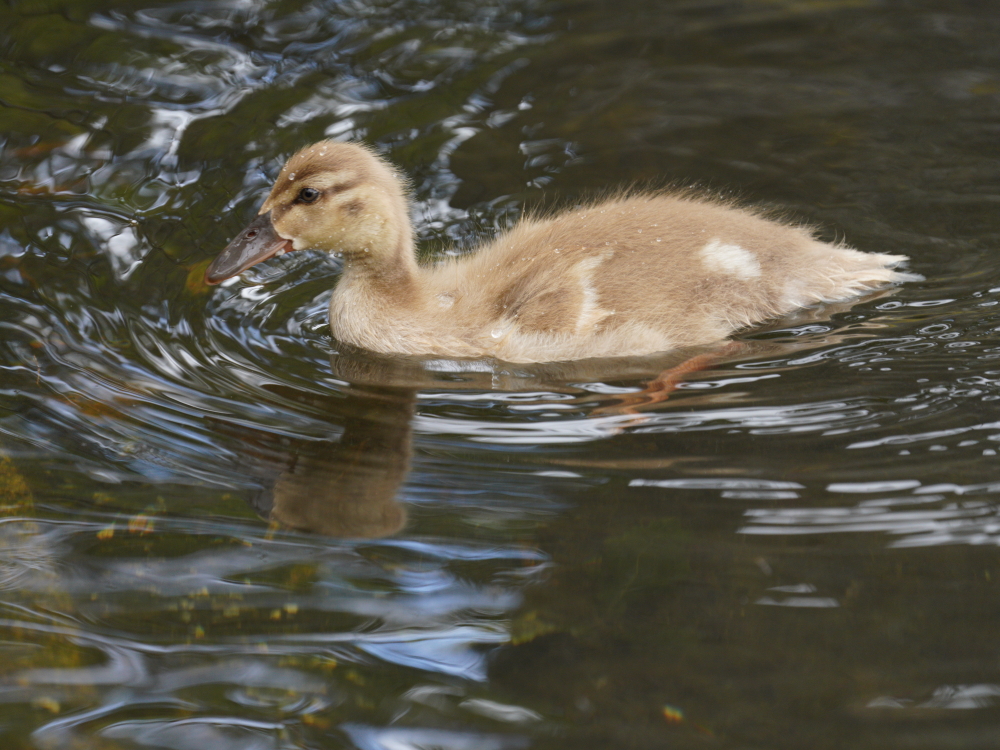
A contrast in colours between the blond Mallard duckling ...


... and the dark one.


There may be greater contrasts, since adult Mallards can be any shade between black and white.

A Pochard drake rested on the Serpentine.


The Mute Swans with four cygnets took them right up to the bridge. It would be a bad idea to go beyond it, since there are two pairs of swans with cygnets on the Long Water which might attack the interlopers.


A young Pied Wagtail at the Round Pond -- thanks to Mark Williams for this picture.


And another fine picture by Paul from Richmond Park: the two young Kestrels from the nest in the dead oak, now teenagers.


The Purple Loosestrife in the Italian Garden fountain pools is a magnet for bees of several species.