Monday, 11 January 2016

The Ring-Necked Parakeets in the leaf yard, now thoroughly spoilt by people feeding them, have taken to lying in wait on the railings next to the patrh so that that can leap out and mob anyone who might have food.


In a willow tree on the edge of the Serpentine, a Carrion Crow was impersonating a bat.


Two Mallard drakes were fighting at Peter Pan.


Three Greylag Geese were sitting on one of the reed rafts at the east end of the Serpentine. Their pose and serious gaze reminded me of the famous portrait of the Bronte sisters.


Under the dead willow tree next to the Italian Garden, a Great Crested Grebe and a Coot were eyeing each other suspiciously. They are always enemies, competing for nesting sites, and Coots will eat grebe chicks if they get a chance.


The pigeon-eating Lesser Black-Backed Gull was prowling among the Feral Pigeons near the Dell restaurant. He made a momentary unsuccessful attempt to grab one. When I came back three-quarters of an hour later, he still hadn't caught one.


Catching pigeons is harder than it looks. They have tremendous acceleration from a standing start, faster than that of the gull, and can only be taken if they wander into a corner where they can be trapped, or start bathing on the edge of the lake. As a result, they are fairly calm when a predator is walking among them.

I think this young Lesser Black-Backed Gull standing on the restaurant roof is the one that was begging for food from the pigeon-eating pair several months ago, and may be their offspring. There aren't many young Lesser Black-Backs in the park.


But there are plenty of young Herring Gulls from the last breeding season and the one before, and they outnumber the adults considerably. Probably most of them are from the colony in Paddington.


The Black Swan was feeding peacefully with his girlfriend on the north shore of the Serpentine.


The other Mute Swans were by no means peaceful, with several dominant males chasing the others, and there were groups of swans flying up and down the lake to get away.

Sunday, 10 January 2016

The Black Swan was alone with his girlfriend at the east end of the Serpentine, hooting and displaying to her.


The girlfriend's brother was at the other end of the lake near the bridge with three other young Mute Swans. A large and brutal male adult was giving them a hard time. The brother is in the background.


The Canada Geese were mistakenly feeling that spring was on its way. The male of this pair launched a dummy attack on some others, coming right across the lake hooting and posturing. He will have earned some street cred with his mate.


Three young Herring Gulls were playing the game of walking along the buoys at the Lido without falling off. You can see from the way the dirty undersides of the buoys are tilted up by their weight that this is quite an acrobatic feat, and requires outstretched wings for balance.


Can a bird look surprised? This Jay had taken a peanut from me and was opening it on a branch when it lost its grip and the nut fell to the ground. If you know this, it looks a picture of consternation. If you don't, perhaps not. I gave it another peanut to soothe its hurt feelings.


When someone else -- in this case Jim -- is feeding the small birds in the leaf yard, there is a chance to take some pictures. Here is a Blue Tit coming to be fed ...


... and one of the three bold Coal Tits who will come to people's hands.


A Robin near Peter Pan came out and sang when he saw me coming by, and I tried his patience by taking pictures of him before I rewarded him with some pine nuts.


A male Blackbird viewed the proceedings suspiciously from the next tree.


The female Blackbird on the other side of the Long Water is quite approachable when she is busy looking for worms. I think she is a resident, as the winter migrant Blackbirds are very wary of people.

Saturday, 9 January 2016

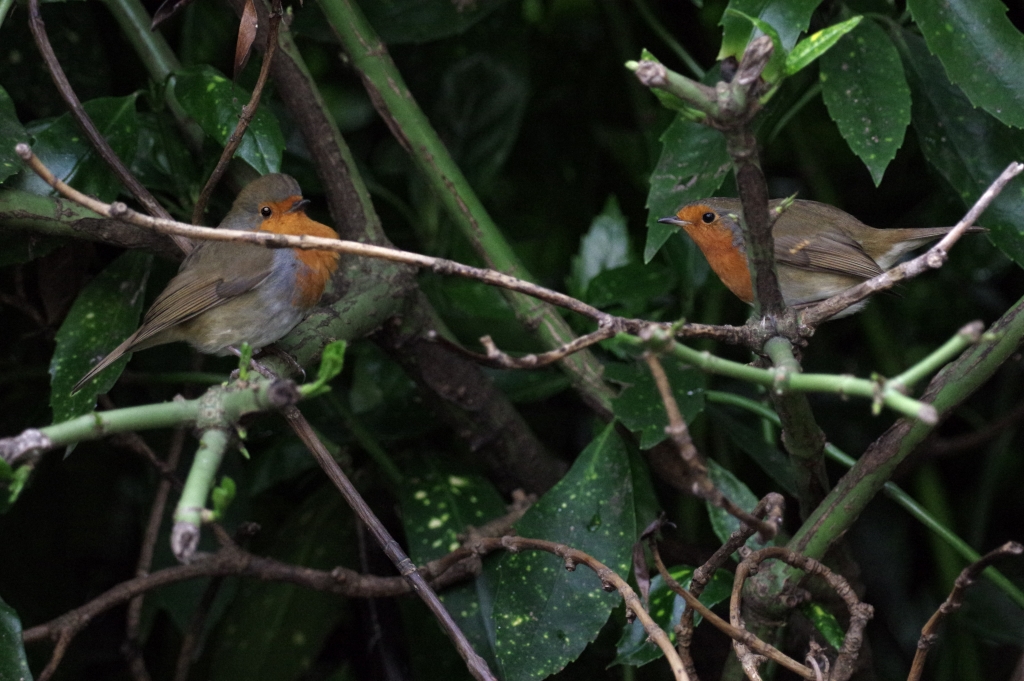
A pair of Robins were being unusually friendly with each other in the leaf yard.


Usually pairs only get together in the spring. In winter they maintain separate territories, and both male and female sing to defend them. It seems that the mild weather has misled these Robins into thinking it's spring. I saw another pair together on the other side of the Long Water.

But they are very hungry with the winter shortage of insects, and almost all of them will now come to people's hands to be fed.


A Song Thrush had just caught a worm in the bushes near the bridge, and was pausing to digest it.


A Wren was poking around for edible creatures in the reeds below the Italian Garden.


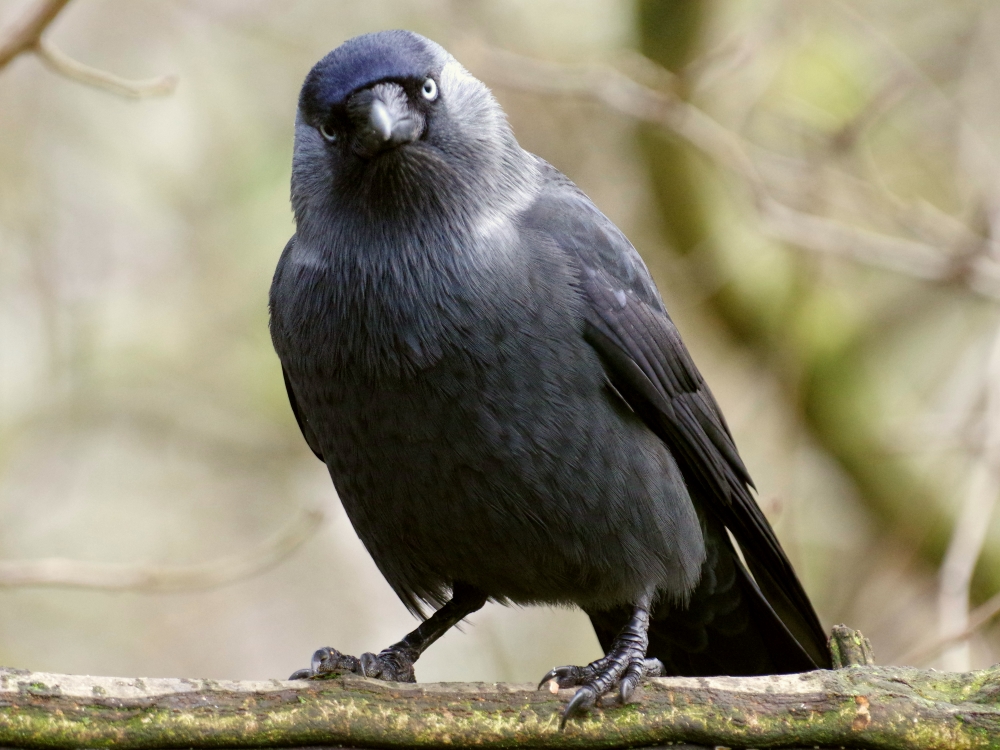
A Jackdaw did a little shuffle of triumph after extracting a peanut from its shell.


The Black Swan, his girlfriend and her brother are now definitely a gang of three. Here they are at the east end of the Serpentine menacing an unfortunate Mute Swan which they have boxed in.


(We may have to modify the bit about 'girlfriend' and 'brother'. Their behaviour is now puzzling. But we shan't know what sex the two young Mute Swans are till later in the year. The 'girlfriend' is already an enormous bird the size of a typical male, and very aggressive. But the Black Swan's behaviour towards her seems to be that of a male towards a female.)

The Black Swan doesn't always get his own way. Crossing the lake, he was challenged by a large male Mute Swan. But it didn't end in a chase.


The dominant swans on the Long Water were in the reeds on the east side, and seemed to be thinking of a nest here. They don't know that this is the place where previous dominant pair were attacked by a fox several years ago, and the female was killed and her eggs eaten. They have a good safe island to nest on when the time comes. But you wouldn't think it was January from the behaviour of the birds.


The Grey Herons' nest on the island has also been almost continuously occupied for several days.


A pair of Egyptian Geese flying recklessly low over the Serpentine forced a Greylag to duck.

Friday, 8 January 2016

The Black Swan has made peace with his girlfriend's brother to such an extent that the three of them are going around together. In fact, the 'brother' may be a sister, though I don't think that swans of any colour would form a ménage à trois; they are monogamous.


This interesting picture was taken by Jorgen Schiott. I had had a bad swan day, not finding him the first time I went round the lake, and then finding him alone the second time and getting only dull pictures.

A Kingfisher appeared again near the Italian Garden. I was seconds too late on the scene, and this striking picture of it streaking across the lake was taken by Tom Bell.


The pigeon-eating Lesser Black-Backed Gull had made another kill.


This happened between the first and the second time I went round the lake, which takes about three-quarters of an hour. During this time the gull and his mate reduced the pigeon to an almost bare carcase, and this picture shows him ripping off the last shreds.

There was a Cormorant in full breeding plumage on a post near the island. The white patch on the thigh is always a sign, though the amount of white on the head varies.


A Great Crested Grebe surfaced from a dive near the bridge.


There aren't many fish left here. The Cormorants have had most of them.

A female Pochard was washing frantically at Peter Pan.


An Egyptian Goose on the Henry Moore sculpture was ruffled by the wind.


This Moorhen was reaching recklessly over the edge of the basin of the marble fountain in the Italian Garden.


Of course, if it fell off, no harm would be done.

A flock of Long-Tailed Tits was passing the Lido.


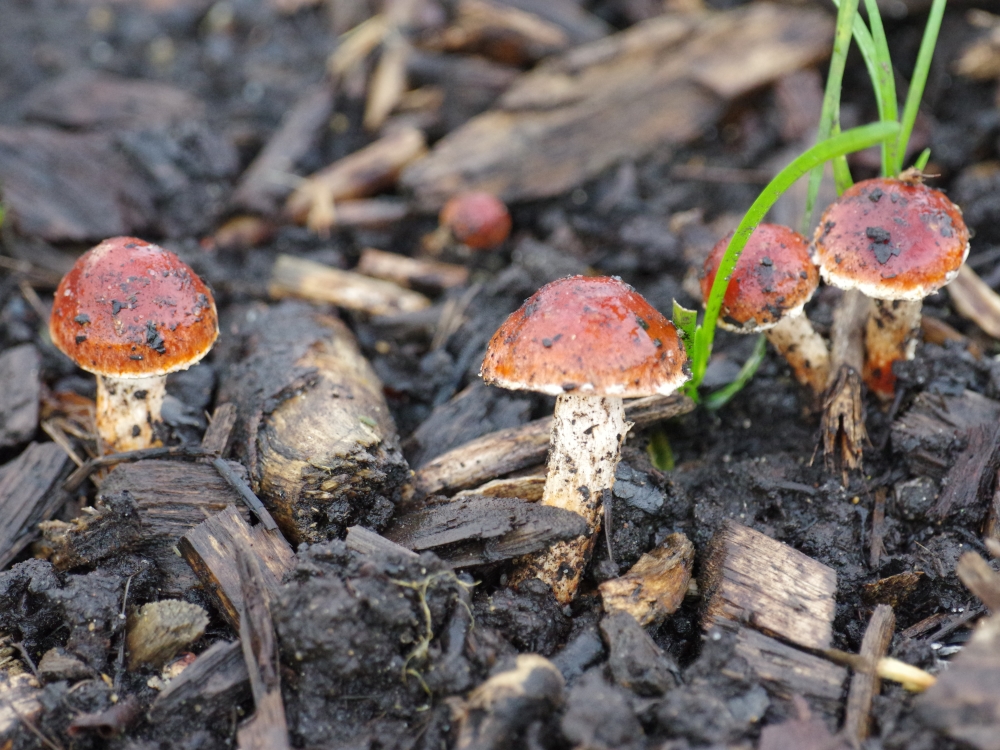
These little mushrooms are Redlead Roundheads, Leratiomyces ceres (formerly Stropharia aurantiaca). They were growing on the wood chips laid around some plane trees near the Speke oblelisk.

Thursday, 7 January 2016

The strong west wind had brought most of the Mute Swans on the Serpentine up to the bridge, which gave them some shelter. Inevitably, a few of them trickled under the bridge on to the Long Water.


They returned seconds later, chased by the male of the resident pair.


The Black Swan was at the other end of the lake with his girlfriend. Both were peacefully preening. The wind made him even more ruffled than usual.


The Teal was still at the top of the Long Water near the Italian Garden, poking around under the waterside brambles.


Two male Tufted Ducks went by, looking very fine with their jaunty tufts, natty black and white plumage, and the smile of a rubber bath duck moulded into their bills.


A female Pochard gazed soulfully into the camera.


A pair of Great Crested Grebes were fishing under the edge of the Italian Garden, where the fountain and several ornamental waterspouts keep the water in constant turmoil. Maybe the highly oxygenated water attracts fish, or maybe grebes just enjoy a good jacuzzi.


Farther down the lake some Cormorants were fishing, and as usual Black-Headed Gulls were trying to grab the fish before the Cormorants swallowed them. I have never seen them succeed at this.


A Jackdaw was on a branch in the leaf yard, expecting to be fed.


So were the Great Tits, Blue Tits and Coal Tits. But Long-Tailed Tits take no notice of people at all. They are neither interested nor afraid. The flock just goes by in its endless pursuit of insects.